Mercury from power plants are Affecting Humans and Sea life.
ByTo the Editor,
The Environment is decreasing as more issues arise. These issues are even affecting humans with the possibility of mercury poisoning. This can be caused by Sea Life consuming mercury from industrial businesses. I believe that converting coal-burning plants near waterways to hydroelectric plants is a safer option to help decrease mercury poisoning but will also help solve other environmental problems.

When they burn coal to produce energy, they bring it to extremely hot temperatures that produce steam that then goes into a turbine, spinning it enough to produce energy. But as this process happens, toxic chemicals are released into our environment. These include Lead, Arsenic and Mercury. When we have coal power plants near waterways, it is not difficult for them to be released into the water and become polluted. If the underwater Ecosystem is now infected with mercury, Sea Life can consume this chemical element, now it won’t take long for humans to consume it as well. 3 billion people rely on seafood, so when Sea Life is being affected, it also affects humans. Mercury can cause neurological effects in humans like loss of cognitive skills, hearing difficulties, vision change and loss of coordination. Even inhaling Mercury can affect the immune system, lungs, digestive system and kidneys. The more Coal being extracted and used for energy production, the more water pollution will happen and cause mercury poisoning in Sea Life and later lead onto humans. If you want to keep manufacturing energy made from coal, a safer suggestion would be to build them away from waterways and instead replace the ones near the water with hydroelectric plants.
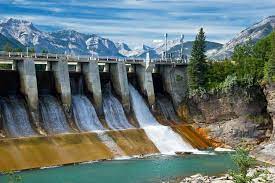
Contrary to coal-powered plants amount, hydroelectric power plants do not release as much greenhouse gas emissions into the air which is a good solution to help decrease air and water pollution. But there is still a negative use that can involve Mercury. When Hydroelectric power plants are processing electricity, vegetation areas containing mercury can be flooded and the chemical can be moved from the soil and into the water. When looking back at the two power plants, there are pros and cons to them. Yes, when looking at both of these power-plants, you will soon realize that they in some way have a harmful affect on the environment. But still, when you extract coal and use it to make energy, there is an extremely high chance these toxic chemicals will be released into the water. If you replace these coal power-plants with Hydroelectric plants, you should find an alternate way when in production so it doesn’t flood and release mercury from vegetation. Doing this, you can reassure the Consumers that they are using the safer option when it comes to Energy consumption.
– Meghan G
Citation-
Spooner, Alecia M. (N.D) What Is the Environmental Impact of Mining and Burning Coal? Retrieved June 5 2021. From- https://www.dummies.com/education/science/environmental-science/what-is-the-environmental-impact-of-mining-and-burning-coal/#:~:text=Coal%20contains%20sulfur%20and%20other,carbon%20dioxide%20into%20the%20atmosphere.
Cherney, Kristeen. (2018) Understanding Mercury poisoning. Retrieved June 5 2021. From-https://www.healthline.com/health/mercury-poisoning#symptoms
Sea west food. (2018) 3 billion people rely on seafood to survive. Retrieved June 5 2021. From- https://seawestnews.com/3-billion-people-rely-on-seafood-to-survive
World Health Organization. (2017). Mercury and Health. Retrieved June 5 2021. From- https://www.who.int/news-room/fact-sheets/detail/mercury-and-health#:~:text=The%20inhalation%20of%20mercury%20vapour,induce%20kidney%20toxicity%20if%20ingested.
Jensen, Allison. (2018) Examining the pros and cons of hydropower. Retrieved June 5 2021. From- https://www.manufacturing.net/chemical-processing/article/13245967/examining-the-pros-and-cons-of-hydropower
Acs News. (2016) Quantifying the hidden environmental cost of hydroelectric dams. Retrieved June 5 2021. From- https://www.acs.org/content/acs/en/pressroom/presspacs/2016/acs-presspac-november-9-2016/quantifying-the-hidden-environmental-cost-of-hydroelectric-dams.html